
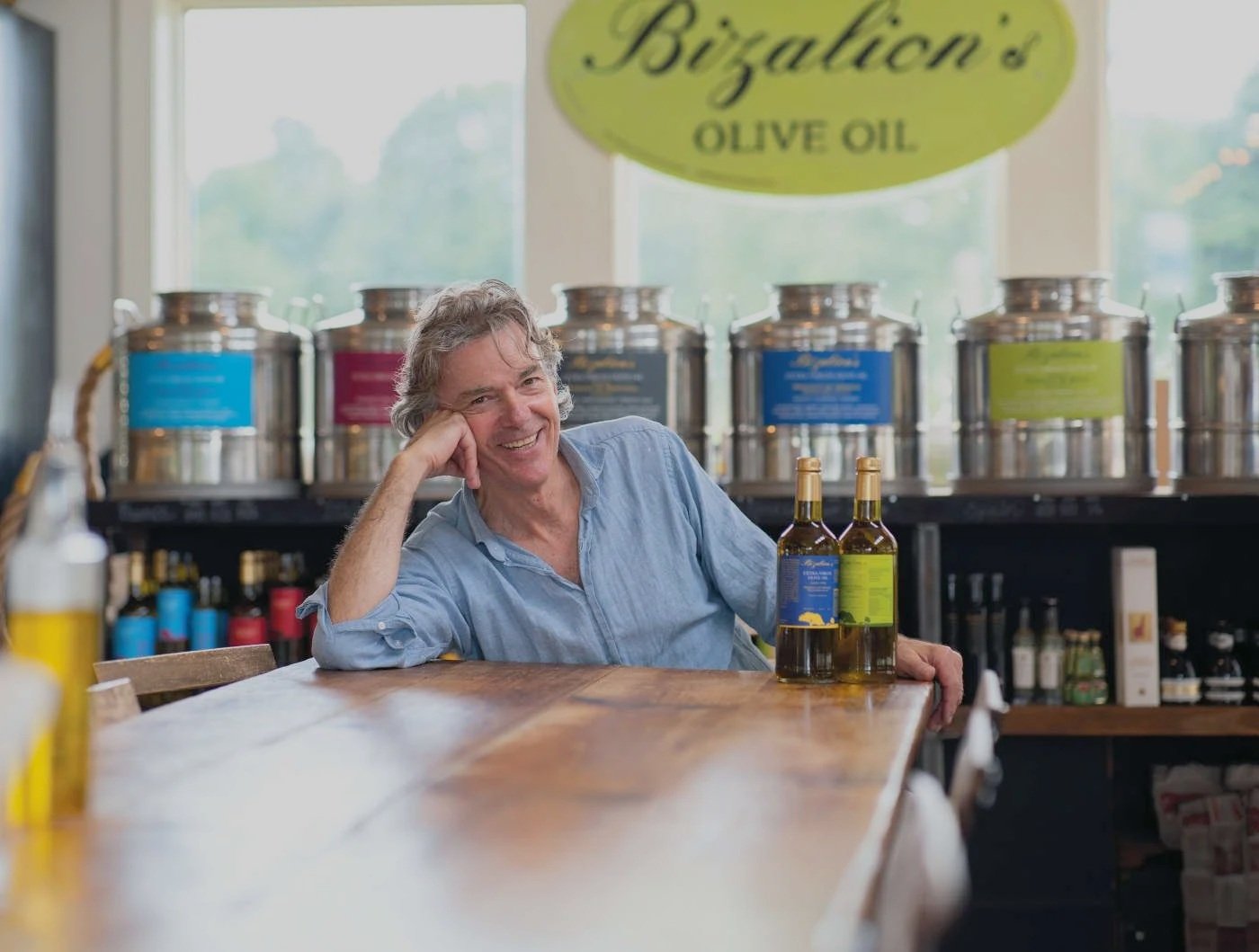
a standard shaped by Provence.
Growing up in Provence meant learning that olive oil was not a luxury. It was part of daily life - poured generously at the table, debated in markets, and expected to be good without exception. In the limestone hills of southern France, surrounded by groves that had stood for generations, quality was not aspirational. It was assumed.
That early standard became the foundation for Bizalion’s. Today, each oil in the collection is measured against that same expectation of character, balance, and integrity. Provence shaped the palate. The Mediterranean became the pursuit.
—
“NOT ALL OLIVE OILS
ARE CREATED EQUAL”
—
For more than twenty years, Jean-François Bizalion has traveled throughout the Mediterranean to understand what truly defines exceptional extra virgin olive oil. From Provence to Greece, Sicily, Portugal, and Spain, the pursuit has always been the same - quality rooted in place. Olive oil is not a commodity. Harvest timing, varietal, soil composition, and pressing methods all shape the final expression. Small decisions at the grove and mill create meaningful differences in flavor, aroma, structure, and freshness. Since 2003, Bizalion’s has worked directly with growers who harvest intentionally, press with precision, and protect the character of their land. Each oil comes from a specific region, a known producer, and a defined harvest. The goal is not uniformity, but expression. Exceptional extra virgin olive oil should have vitality and balance. It should taste alive and elevate food without overpowering it. After decades of tasting harvest after harvest, one principle remains clear. Great olive oil is cultivated with care and selected with intention.
From decades of tasting and travel, six clear standards now define how we judge our oils.
Fruitiness is the primary indicator of freshness and quality. It should remind you of fresh olives, green grass, tomato leaf, almond, or artichoke. If an oil smells flat, waxy, or stale, it is not high quality.
fruitiness.
Bitterness is a positive attribute in good olive oil, especially from early harvest olives. It should feel clean and structured, not harsh or metallic. Balanced bitterness signals antioxidants and proper harvest timing.
bitterness.
Pungency is the peppery sensation you feel in the throat. A slight cough is often a sign of freshness and high polyphenol content. It should be lively and crisp, not burning or aggressive.
pungency.
No single characteristic should dominate. Fruitiness, bitterness, and pungency should work together. A great oil feels harmonious rather than sharp or one dimensional.
balance.
Olive oil is best within its harvest year. Check the harvest date, not just the best by date. Fresh oils taste vibrant and energetic. Older oils taste dull and muted.
freshness.
A high quality oil comes from a defined region, producer, and harvest. Traceability matters. Oils labeled vaguely as “Mediterranean blend” often lack transparency and consistency.